L'Oréal vs. Bellure (2009): Why "Free-Riding" on Famous Brands is Illegal (Even Without Consumer Confusion)
Can competitors sell "smell-alike" perfumes and use your brand name in comparison lists? Learn how L'Oréal won a landmark ruling against brand free-riding.
Introduction
Building a luxury brand requires millions in capital investment, decades of research, and relentless marketing to create a prestige image. But what happens when a competitor creates cheap alternative products, designs similar packaging, and publishes comparison lists directly matching their products to yours? In the landmark decision of L'Oréal SA v. Bellure NV (2009), the European Court of Justice (ECJ) tackled whether piggybacking on a famous brand's reputation—often called "free-riding"—is illegal even if consumers aren't deceived.
The Core Dispute
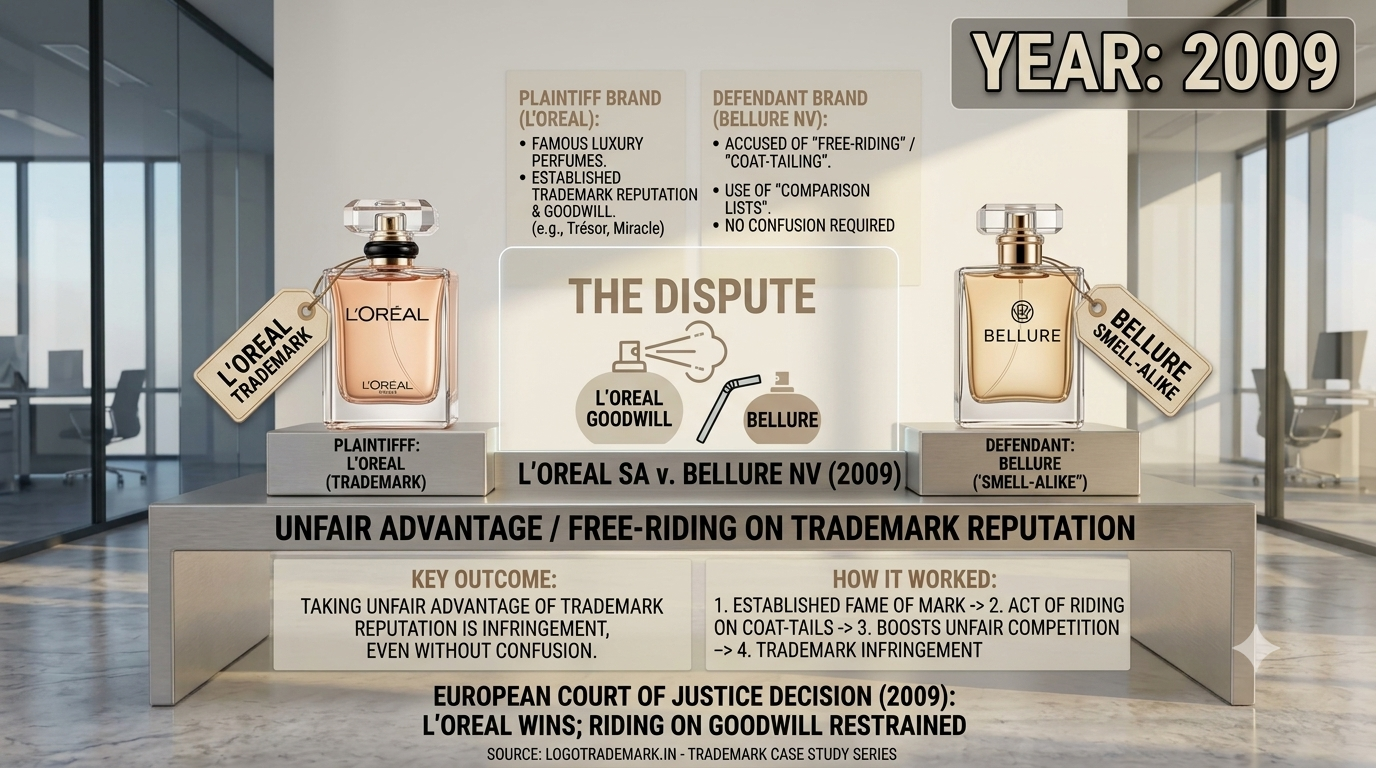
Bellure NV manufactured budget "smell-alike" perfumes designed to mimic the fragrances of luxury brands like L'Oréal. To sell these products, Bellure used similar bottle shapes and distributed comparison lists to retailers, explicitly stating which Bellure fragrance corresponded to which famous L'Oréal perfume.
The legal battle centered on two critical questions:
Free-Riding Without Confusion: Can a competitor be guilty of trademark infringement if they use packaging and names that remind consumers of a famous brand, even if buyers know they are purchasing a cheap replica?
Comparative Advertising Limits: Can a budget brand use a registered trademark in comparison lists to inform consumers that their product smells just like the luxury brand?
Court's Decision
The European Court of Justice ruled decisively in favor of L'Oréal SA, delivering a major victory for owners of famous trademarks.
The Court established that:
Taking Unfair Advantage ("Free-Riding"): Infringement occurs when a third party attempts to "ride on the coat-tails" of a renowned trademark to benefit from its power of attraction, reputation, and prestige without paying for it.
No Confusion Needed: The court clarified that showing actual consumer confusion or direct financial loss to the original brand is not required. Creating a mental link in the consumer's mind to exploit the luxury brand's reputation is enough to constitute trademark infringement.
Imitation Lists are Unlawful: Presenting a product as an imitation or replica of a goods bearing a protected trademark violates comparative advertising laws, making such comparison lists illegal.
Key Takeaways for Businesses
This historic legal ruling offers crucial protection principles for modern startups, brand managers, and business owners:
Reputation is a Asset: Trademark protection isn't just about preventing customer confusion—it protects the commercial value, prestige, and goodwill you have invested into your brand.
Competitors Cannot "Piggyback": Rival companies cannot legally use lookalike packaging or direct comparison lists to exploit the reputation you spent years building.
Registered Trademarks Block Replicas: Strong trademark registration enables you to stop budget copycats from marketing their products as "dupes" or "alternatives" using your brand identity.
Strict Limits on Comparative Ads: While objective price and spec comparisons are allowed, explicitly marketing your product as a replica of a famous brand crosses the line into infringement.
Protect Your Brand Today!
Your brand's prestige and market reputation are irreplaceable assets. Don't allow competitors to free-ride on your hard work or dilute your brand equity with lookalike products and comparison tactics. Secure your identity, lock down your exclusive legal rights, and safeguard your marketplace value.