Adidas vs. Payless (2008): The Historic $300M Verdict Protecting Parallel Stripes & Trade Dress
Can a competitor bypass trademark laws by selling shoes with 2 or 4 stripes instead of 3? Discover how Adidas won a historic $305 million verdict.
Introduction
In the global fashion and sportswear industry, visual brand identity is everything. A brand’s reputation isn't just tied to its name—it lives in its distinctive visual elements, patterns, and overall "trade dress." In the landmark legal battle of Adidas America, Inc. v. Payless ShoeSource, Inc. (2008), sportswear powerhouse Adidas fought a massive war against discount footwear retailer Payless to protect its iconic Three-Stripe trademark and "Superstar" sneaker aesthetic. The result was one of the largest financial verdicts in intellectual property history.
The Core Dispute
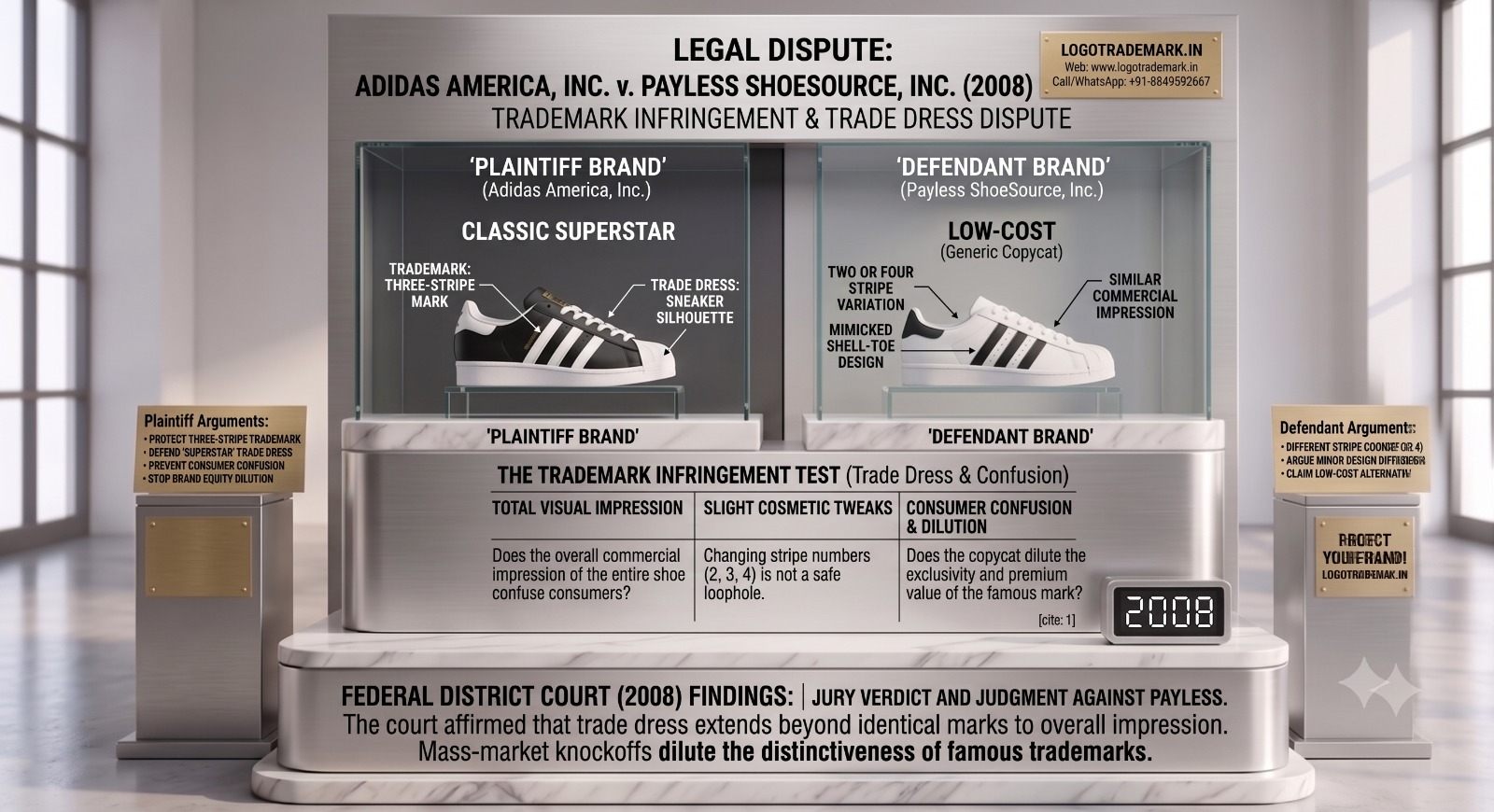
Adidas has spent decades establishing its famous "Three-Stripe Mark" as a global symbol of athletic performance and quality. Payless ShoeSource began marketing and selling low-cost athletic footwear that featured two-stripe and four-stripe parallel patterns, as well as shell-toe designs closely resembling the famous Adidas "Superstar" trade dress.
The core legal conflict centered on:
Lookalike Visual Patterns: Payless argued that because its shoes used two or four stripes instead of three, they were legally distinct and did not copy Adidas' exact trademark.
Consumer Confusion & Brand Dilution: Adidas argued that Payless was intentionally mimicking the overall commercial impression of Adidas footwear to profit off its goodwill. Adidas contended that selling low-quality lookalikes distorted consumer perception and diluted the exclusivity of its famous three-stripe mark.
Court's Decision
A U.S. federal jury delivered a crushing blow to Payless, initially awarding Adidas $305 million in damages (comprising actual damages, profit disgorgement, and punitive damages, which was later adjusted upon post-trial review).
The court established monumental trade dress and trademark principles:
Total Visual Impression Matters: Trademark protection extends far beyond exact word matches or identical logos. Non-verbal visual indicators—such as parallel stripes, color placements, and distinct design features—are fully protected under trade dress law.
Slight Cosmetic Tweaks Are Infringement: Changing the number of stripes from three to two or four does not create a safe legal loophole if the overall look deceives or confuses an average consumer.
Protecting Brand Equity Against Dilution: The court recognized that allowing mass-market knockoffs to flood store shelves dilutes the distinctiveness and premium value built into a famous trademark.
Key Takeaways for Businesses
This record-setting verdict delivers critical warnings and lessons for fashion brands, retail businesses, and product manufacturers:
Visual Patterns Are Protectable IP: Your brand's non-verbal identity—such as signature patterns, stripe layouts, or unique shoe silhouettes—can be protected as trade dress.
Clever Alterations Will Not Save Copycats: Subtracting or adding a stripe, changing a single letter, or slightly altering a color scheme will not shield a business from willful infringement lawsuits.
Enormous Financial Risks for Knockoffs: Profits earned from selling lookalike goods can be entirely confiscated by the court, alongside severe punitive damages.
Register & Monitor Your Visual Marks: Proactively registering distinct visual features, logos, and packaging designs gives you the legal leverage to shut down unauthorized imitations before they erode your market share.
Protect Your Brand Today!
Your brand's visual identity and distinct designs take years of hard work and marketing investment to build. Don't let copycats profit off your reputation by creating lookalike products and confusing your customers. Build an unshakeable legal shield around your logos, trade dress, and brand assets.