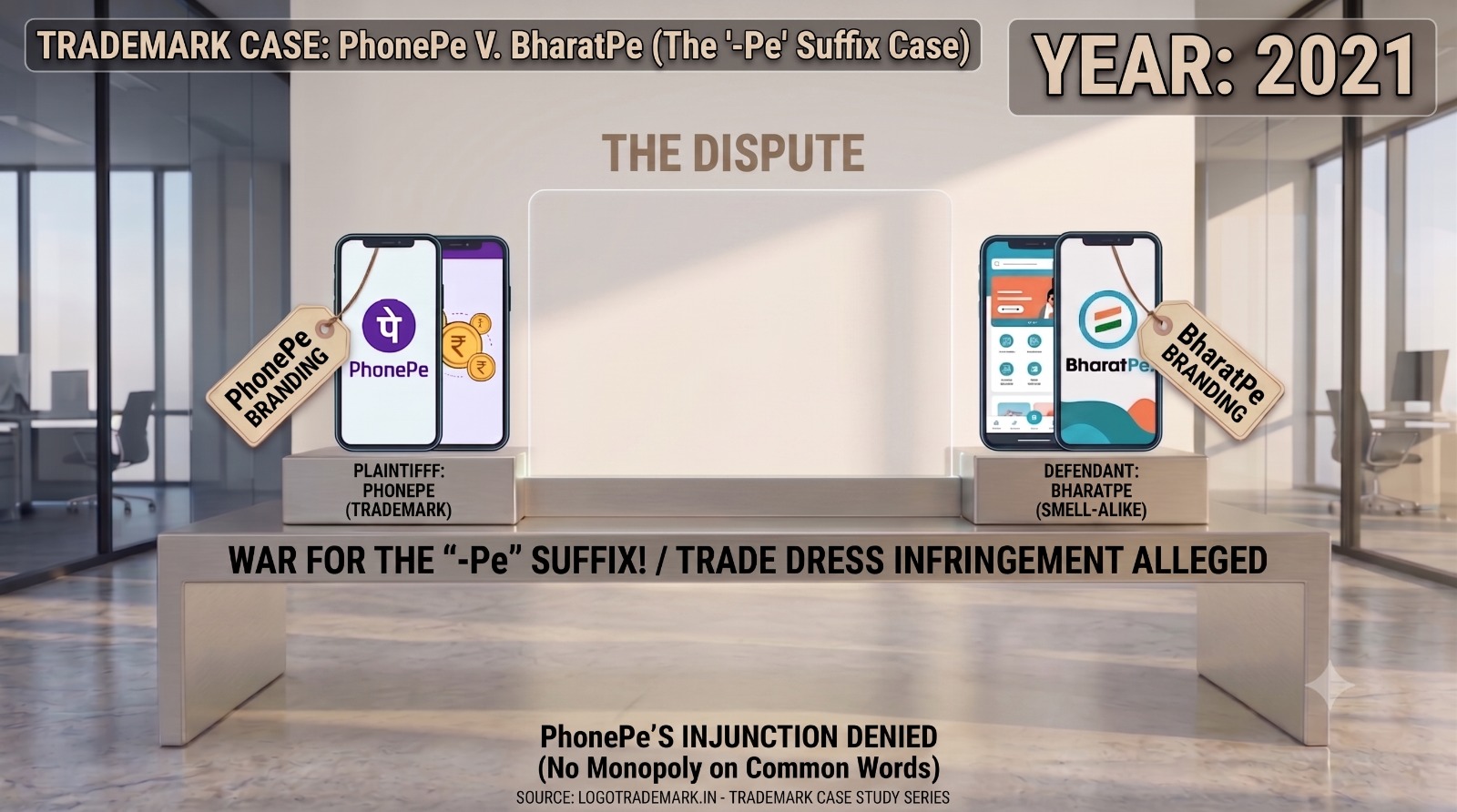
PhonePe vs. BharatPe: Can a Company Monopolize a Generic Word Suffix Like "-Pe"?
Can a business claim exclusive legal rights over a common word suffix? Discover how the Delhi High Court ruled in the landmark PhonePe vs. BharatPe trademark dispute.
Introduction
In the hyper-competitive fintech ecosystem, building a recognizable brand name is key to winning market share. But what happens when two industry giants use the same popular suffix in their brand names? The battle of PhonePe Pvt. Ltd. v. Ezy Services & Anr. (BharatPe) before the Delhi High Court became one of India’s most landmark trademark disputes. The case tested a crucial legal boundary: Can a company claim exclusive trademark rights over a single descriptive suffix or misspelling like "-Pe"?
The Core Dispute
PhonePe, one of India's leading UPI payment platforms, filed a lawsuit seeking a permanent injunction against rival BharatPe. PhonePe argued that the suffix "-Pe" was an invented, dominant feature of its registered trademark "PhonePe" and that BharatPe’s use of the same suffix created consumer confusion and diluted their hard-earned brand goodwill.
The core legal arguments revolved around:
Monopoly Over a Part of a Trademark: PhonePe claimed that because "-Pe" was a creative adaptation of the word "Pay" (or the Hindi preposition "Pe" meaning "on"), they held exclusive rights to prevent others from using it.
The Anti-Dissection Rule: BharatPe argued that under Section 17 of the Indian Trade Marks Act, 1999, trademarks must be judged as a whole, not broken down into individual parts to claim separate ownership.
Generic and Descriptive Terms: BharatPe maintained that "Pe" is merely a phonetic misspelling of "Pay" or a common Hindi word ("on phone" / "phone pe"), which belongs to the public domain and cannot be monopolized by any single business.
Court's Decision
The Delhi High Court refused to grant an interim injunction against BharatPe, delivering a landmark ruling on composite trademarks and descriptive terms.
The Court held that:
No Monopoly on Misspellings or Generic Terms: Merely misspelling a descriptive word (converting "Pay" to "Pe") or using a common vernacular word does not grant automatic exclusivity over that word part.
Anti-Dissection Rule Upheld: Under Section 17 of the Trade Marks Act, 1999, a registered trademark is protected as a whole. A business cannot dissect a composite mark into individual syllables to claim ownership over a generic suffix unless that specific suffix is separately registered or has acquired immense secondary distinctiveness.
Distinction Between Whole Marks: Comparing "PhonePe" and "BharatPe" as complete brand names, the court noted that "Phone" and "Bharat" are visually, phonetically, and structurally distinct.
Key Takeaways for Businesses
This historic judgment provides essential lessons for startups, fintech founders, and business owners when choosing brand names:
Avoid Relying Only on Generic Suffixes: Building a brand strategy around descriptive or common suffixes (like -Pay, -Pe, -Cart, or -App) makes it very difficult to legally stop competitors from using similar suffixes.
Trademarks Are Protected as a Whole: Unless you register individual components of your mark separately (if legally eligible), your protection applies to the full composite name, not individual fragments.
Secondary Meaning Requires High Proof: To claim exclusive rights over a descriptive term or misspelling, you must provide overwhelming evidence that the public associates that specific word only with your business.
Focus on Inherent Distinctiveness: Inventing unique, arbitrary words offers vastly stronger legal protection than relying on descriptive terms or clever spellings.
Protect Your Brand Today!
Choosing the right brand name is the first line of defense in legal protection. Relying on generic or descriptive words can leave your business vulnerable when competitors launch similar names. Ensure your brand strategy is bulletproof with proper trademark registration and legal vetting.