Cadila vs. Cadila (2001): Why Confusing Drug Names Can Cost Lives (And How the Supreme Court Stepped In)
Two malaria drugs with deceptively similar names sparked a historic Supreme Court case. Learn why pharmaceutical trademarks face strict legal scrutiny in India.
Introduction
In most consumer industries, a confused customer might end up buying the wrong brand of shoes or tea bags—an inconvenient mistake, but hardly fatal. In the pharmaceutical sector, however, brand name confusion isn't just a matter of lost profits; it is literally a matter of life and death. In the landmark case of Cadila Health Care Ltd. v. Cadila Pharmaceuticals Ltd. (2001), the Supreme Court of India set an absolute gold standard for drug naming and brand protection, ruling that public health must always supersede commercial trademark disputes.
The Core Dispute
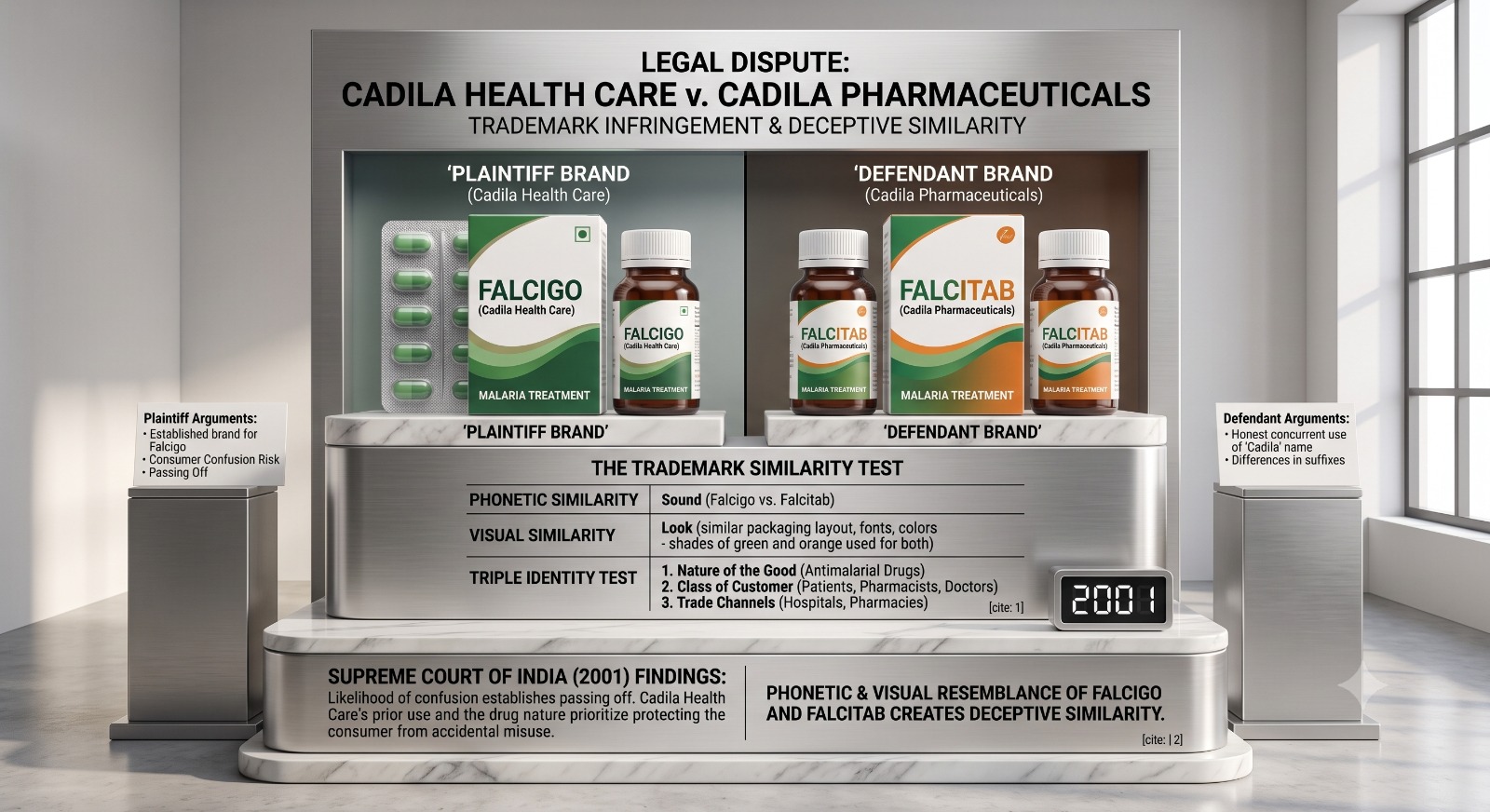
Following a corporate restructuring of the original Cadila Group, both newly formed companies—Cadila Health Care Ltd. and Cadila Pharmaceuticals Ltd.—retained the legal right to use "Cadila" in their corporate names. However, a severe legal battle erupted over two specific prescription drugs designed to treat Falciparum malaria:
Cadila Health Care manufactured and marketed an anti-malarial drug under the brand name "Falcigo".
Cadila Pharmaceuticals introduced a competing anti-malarial drug branded as "Falcitab".
Cadila Health Care filed a passing off suit, claiming that "Falcitab" was deceptively similar in sound and spelling to "Falcigo". The defendant argued that both names were derived from the disease Falciparum—a common practice in the pharma industry—and because these were prescription drugs dispensed by medical professionals and hospitals, the chances of confusion were minimal.
Court's Decision
The Supreme Court of India recognized the grave dangers of deceptively similar medical brand names and established authoritative principles governing pharmaceutical trademarks:
Higher Scrutiny for Medicines: The apex court ruled that medicinal products must be judged under a far stricter standard of scrutiny than ordinary consumer goods. A mistake in dispensing medicine due to phonetic or visual confusion can cause irreversible health harm or death.
Human Error Cannot Be Ruled Out: The court rejected the argument that prescription drugs are safe from confusion because doctors write them. Given handwriting variations, imperfect recollection, and busy hospital staff, human error remains a massive risk.
7-Factor Test for Deceptive Similarity: The Supreme Court laid down seven crucial factors to evaluate passing off claims, including the nature of the marks, phonetic similarity, nature of the goods, class of purchasers, and the degree of care expected from consumers.
Key Takeaways for Businesses
This historic ruling carries vital legal lessons for pharmaceutical companies, healthcare startups, and consumer brand owners alike:
Stricter Rules Apply to Sensitive Products: If your product directly impacts consumer health, safety, or well-being, courts will apply maximum vigilance against confusingly similar brand names.
Phonetic Similarity Matters: Having different end-letters (e.g., "-go" vs. "-tab") is not enough if the prefix and overall sound create auditory confusion.
Common Industry Prefixes Require Careful Clearance: While naming products after the disease or active ingredient is common, adding generic suffixes does not automatically grant you immunity from trademark passing off suits.
Thorough Pre-Launch Clearance is Mandatory: Performing comprehensive legal trademark searches before naming drugs or health products prevents costly regulatory hurdles, re-packaging, and courtroom bans.
Protect Your Brand Today!
Whether you operate in pharmaceuticals, food and beverage, or consumer goods, choosing a confusingly similar brand name can trigger catastrophic legal battles and reputational loss. Ensure your brand identity is 100% unique, legally vetted, and fully protected from day one.