KRBL vs. Praveen Kumar (2025): How
Can copycats dilute the value of well-known staple food brands? Discover how the appellate court stepped in to shield the iconic India Gate trademark.
Introduction
Building a household brand in the staple food sector takes decades of consistent quality, massive distribution, and extensive marketing. When a brand achieves "well-known" status, it becomes a prime target for copycats trying to siphon off its reputation. In the milestone legal battle of KRBL Ltd. (India Gate) v. Praveen Kumar Buyyani (2025), the appellate court had to address a critical threat: how deceptive lookalike marks chip away at the distinctiveness of trusted food giants.
The Core Dispute
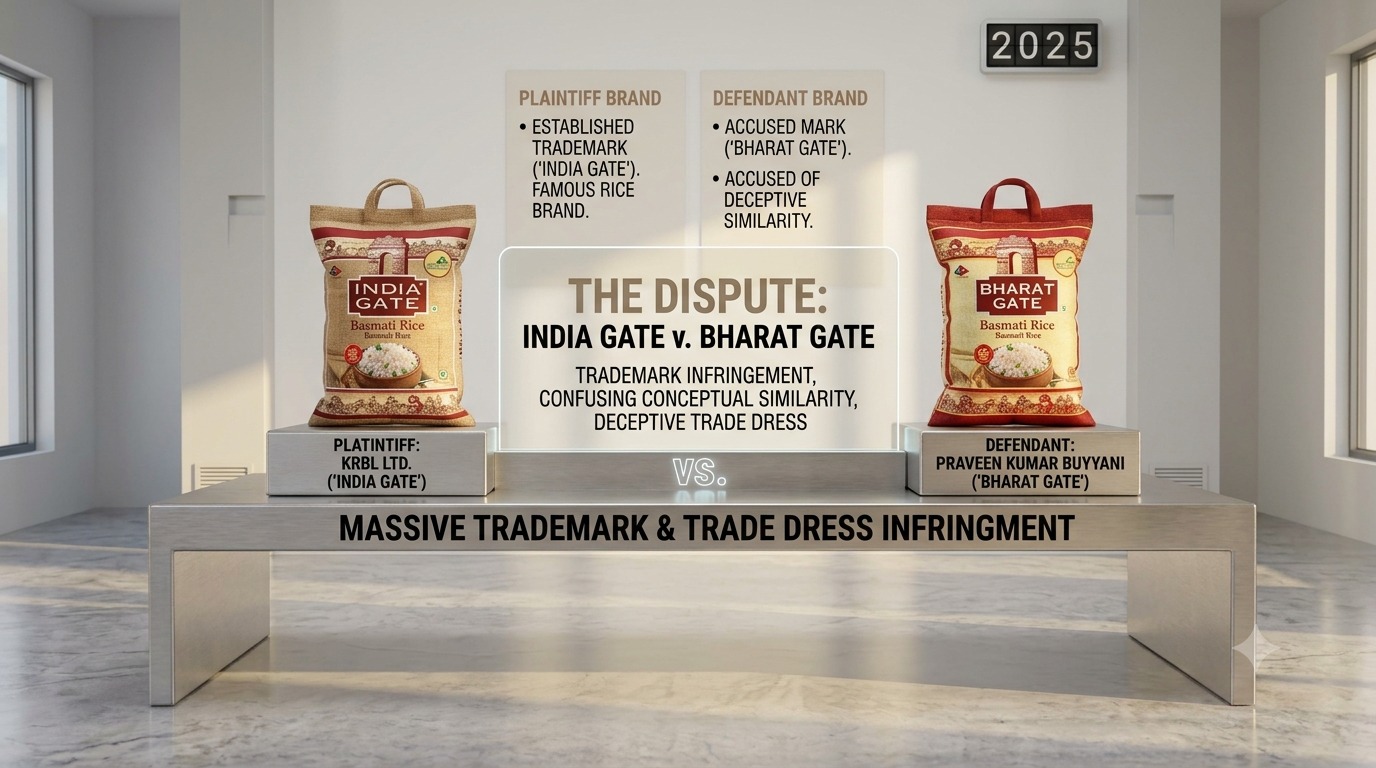
The corporate battle erupted when KRBL Ltd., the manufacturer of the globally famous "India Gate" basmati rice, discovered a competitor using a highly deceptive mark.
The core legal conflict focused on the following issues:
Brand Dilution: The competitor adopted a mark that mimicked the essential features of the famous "India Gate" brand identity.
Consumer Deception: Because staple food products are purchased by a vast demographic—ranging from retail consumers to everyday shoppers—subtle similarities in branding can easily lead to confusion at the point of sale.
Exploiting Goodwill: KRBL argued that the rival was deliberately riding on the coattails of their hard-earned marketplace reputation, which threatened to blur and weaken the distinct identity of their flagship trademark.
Court's Decision
The appellate court ruled decisively in favor of KRBL Ltd., providing landmark injunctive relief to protect the "India Gate" trademark.
The court emphasized that well-known staple food brands require an exceptionally high degree of protection because consumers rely heavily on visual trust. The ruling established that allowing deceptive marks to coexist in the market inevitably dilutes the distinctiveness of the original brand. By granting an injunction, the court legally barred the competitor from using the deceptive mark, reaffirming that copycats cannot erode the market value of established trademarks.
Key Takeaways for Businesses
This 2025 landmark ruling offers massive, vital lessons for modern food startups, FMCG entrepreneurs, and established brand owners:
Protect Against Dilution, Not Just Direct Copying: A competitor doesn't have to copy your logo exactly to break the law. If their mark is similar enough to blur your brand's unique identity or confuse consumers, it constitutes infringement.
Staple Brands Need Stronger Shields: In consumer goods and food sectors, brand loyalty is tied directly to visual trust. Safeguarding your packaging presentation and core brand elements is essential to prevent copycats from stealing your shelf space.
The Power of "Well-Known" Status: Achieving and legally maintaining a strong trademark presence allows your business to claim broader protection in court, making it significantly easier to shut down copycats quickly.
Enforce Your Rights Early: Do not wait for a copycat to take over a region. Securing immediate injunctive relief, just as KRBL did, prevents long-term erosion of your consumer base and market share.
Protect Your Brand Today!
Your brand's distinctiveness is its most valuable asset. Building consumer trust takes years of dedication, but a single deceptive competitor can dilute your market reputation overnight. Secure your identity, lock down your market presence, and build an unshakeable legal wall around your business.