Coca-Cola vs. Koke Co. (1920): How a Descriptive Name Became a Multi-Billion Dollar Trademark Shield
Can competitors copy your brand if your name describes your product? Learn how Coca-Cola won a historic court battle to protect its name from copycats.
Introduction
Imagine building a beverage brand so massive that its name becomes synonymous with refreshment worldwide. Now imagine a competitor popping up, calling themselves a strikingly similar name, and claiming they have every right to do so because your brand name is just "descriptive." This is exactly what happened in the historic legal battle of Coca-Cola Co. v. Koke Co. of America (1920). This landmark U.S. Supreme Court case set a monumental precedent for how brand names evolve and secure absolute legal protection.
The Core Dispute
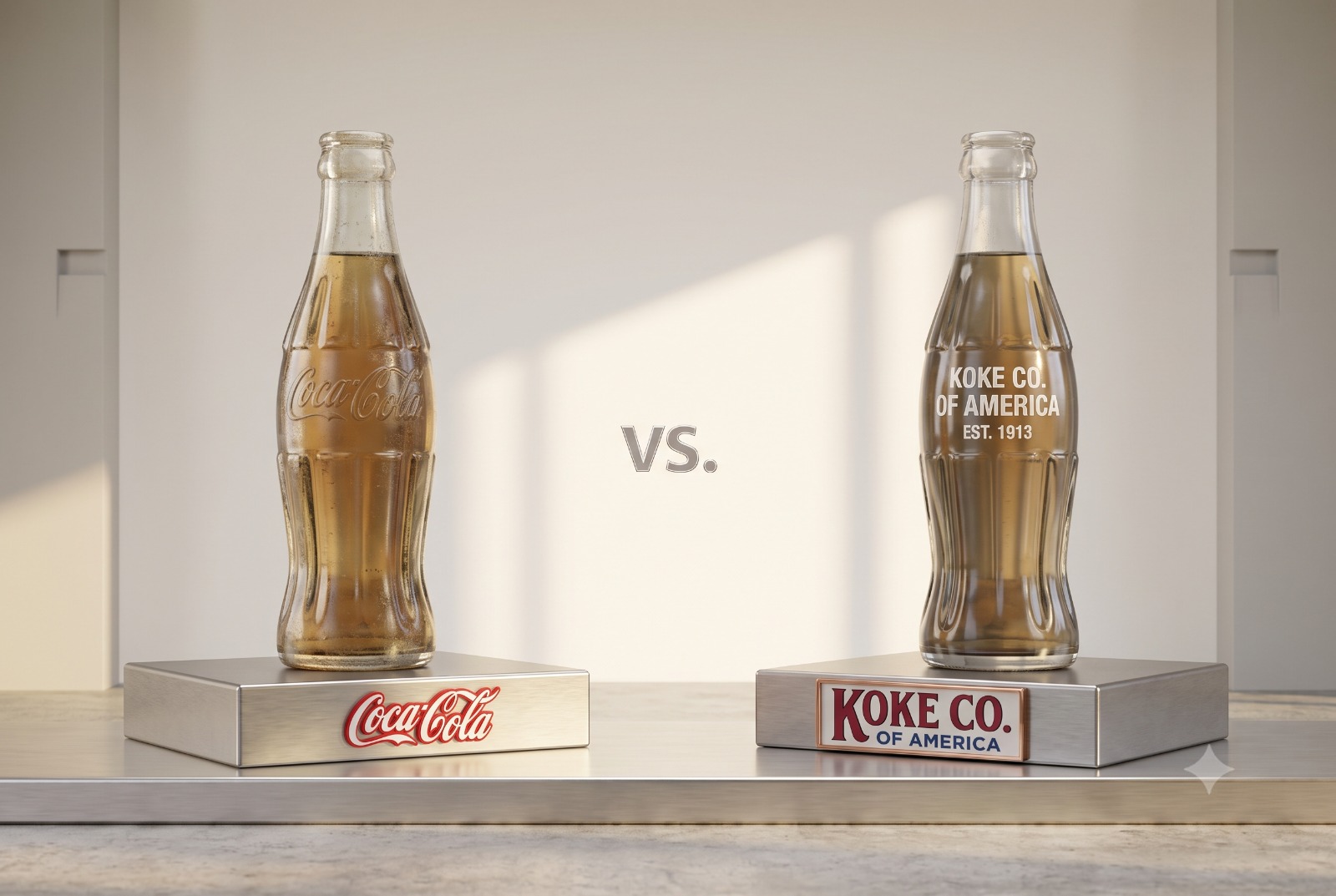
In the early 1900s, the Coca-Cola Company found itself fighting the "Koke Company of America," which was manufacturing a similar cola drink named "Koke."
The core legal conflict boiled down to these points:
The Koke Company argued that the name "Coca-Cola" was merely descriptive—originally derived from its ingredients (coca leaves and cola nuts).
Under old legal principles, purely descriptive terms couldn't easily be monopolized as exclusive trademarks.
Koke Co. claimed that because the name described the product, anyone should be allowed to use a similar-sounding name like "Koke" to describe their own drink.
Court's Decision
The U.S. Supreme Court ruled decisively in favor of The Coca-Cola Co. The court established that even if a brand name starts out as descriptive, it can acquire what law calls a "secondary meaning" over time through massive public recognition.
Justice Oliver Wendell Holmes noted that to the public, the word "Coca-Cola" no longer just meant a mix of plant extracts; it meant one specific, trusted product from one specific company. Therefore, the court upheld the Coca-Cola trademark and ruled that an injunction (a legal order to stop) is absolutely available against imitators trying to ride on the coattails of an established brand.
Key Takeaways for Businesses
This century-old case still carries massive, vital lessons for modern startups and entrepreneurs today:
Descriptive Names Can Win: If your business name starts out describing what you do, don't lose hope. With consistent branding and market presence, it can acquire a powerful "secondary meaning" that the law will fiercely protect.
Imitation is Not Flattery, It’s Infringement: Competitors cannot use phonetic similarities (like "Koke" for "Coke") to confuse your customers or siphon off your hard-earned reputation.
The Power of an Injunction: Getting a registered trademark gives you the ultimate legal right to instantly stop imitators in their tracks before they dilute your market share.
Early Registration Safeguards Evolution: Protecting your brand from day one ensures that as your business grows from a local startup to a household name, your legal rights scale up right along with your success.
Protect Your Brand Today!
Your brand name is the single most valuable asset your business owns—don't leave it vulnerable to copycats and cheap imitators. Whether your name is uniquely creative or has grown to define your market, securing it legally is the only way to guarantee your business's future.